From there, you might decide to sell additional shares, streamline circulation of shares or plan the distribution of profits. Preferred stock, which provides a higher claim on company earnings and assets and often entitles its holders to dividends before common stockholders. how to prepare a statement of stockholders equity A stockholders’ equity statement is a financial document that illustrates the changes in value to a shareholder’s ownership in a company.

When — and How — to Create a Stockholders’ Equity Statement

In the event of a liquidation, preferred stockholders will receive the priority of payment as compared to a common stockholder. If it is positive, it indicates that the company’s assets are more than its liabilities. Negativity may arise due to buyback of shares; Writedowns, and Continuous losses. If the negativity continues for longer, the company may go insolvent due to poor financial health.

Additionally, understanding a company’s structure and risk profile is critical to making informed investment decisions. Analysts use financial statement analysis to evaluate a company’s financial health and position relative to its industry peers. It helps them identify trends, patterns, and anomalies in a company’s financial statements, which can provide valuable insights into its operations and potential for growth. Overall, understanding financial statements is essential for analyzing a company’s financial health. Investors use financial statements to make informed investment decisions and to assess a company’s financial performance and position.

Tax and Accounting Aspects

Founder shares or class A shares have more voting rights than for instance the other class of shares. Investors and banks alike need to assess not only the potential returns of an investment or loan but… Managing financial risks is a crucial aspect of banking and financial institutions.

Dividend Payments

  • Since the cash received is favorable for the corporation’s cash balance, the amounts received will be reported as positive amounts on the SCF.
  • Let’s assume a company has a beginning balance in treasury stock of ($100,000) and purchases of treasury stock in the period total ($300,000).
  • Rather than paying this income to shareholders, it remains with the company and is reinvested in the business.

It aids the company to rationalize its financial decisions and the investors to decide whether to invest in the company. In essence, watching the trend in shareholders equity, return on equity ratio, and cost of equity gives an initial understanding of a company’s financial position and efficiency. It’s crucial to dig deeper and combine these insights with additional financial statement analysis for a more comprehensive picture. When analyzing a company’s financial statements, it is important to pay close attention to free cash flow, which is a key indicator of a company’s ability to generate cash and reinvest in its business.

The equity capital/stockholders’ equity of a firm can also be defined as its net assets (total assets minus total liabilities). As stockholders, investors contribute their share of (paid-in) capital, which is the primary source of total stockholders’ equity. An investor’s paid-in capital is a component in establishing his or her ownership percentage. Firstly, it provides a comprehensive picture of a company’s financial condition. Looking at only one statement might give an incomplete image as changes in one can affect the other. For example, high profits (income statement) result in higher retained earnings, leading to an increase in shareholder’s equity (balance sheet).

Common stockholders’ equity measures the amount of money that would be distributable to common shareholders if a company were to liquidate its assets. The amount of paid-in capital from an investor is a factor in determining his/her ownership percentage. ROE is equal to a fiscal year net income (after preferred stock dividends, before common stock dividends), divided by total equity (excluding preferred shares), expressed as a percentage. Equity is the value of the business left to its owners after the business has paid all liabilities. The statement outlines equity activity, including common stock issued, dividends paid, and changes in retained earnings.

An increase in retained earnings year over year can signal a company that is healthy and profitable, whereas a decrease may raise a red flag. From a shareholder’s point of view, the Shareholders’ Equity Statement ensures transparency – a significant component that bolsters trust and confidence in the management. Additionally, shareholders can monitor the company’s net worth related to their shares, determining whether their investment has grown or depreciated over certain time horizons. The statement of stockholders’ equity summarizes changes in equity over an accounting period. Our statement of stockholders’ equity template clearly presents this important information. This statement is a must for accounting students, financial analysts, and investors.

  • Conversely, a consistently decreasing equity may imply potential financial distress.
  • It’s essential to remember that while changes in shareholders equity can be a valuable tool for financial analysis, it shouldn’t be viewed in isolation.
  • The income statement shows a company’s revenue and expenses, while the balance sheet shows its assets, liabilities, and shareholder equity.

Why is the statement of stockholders’ equity important?

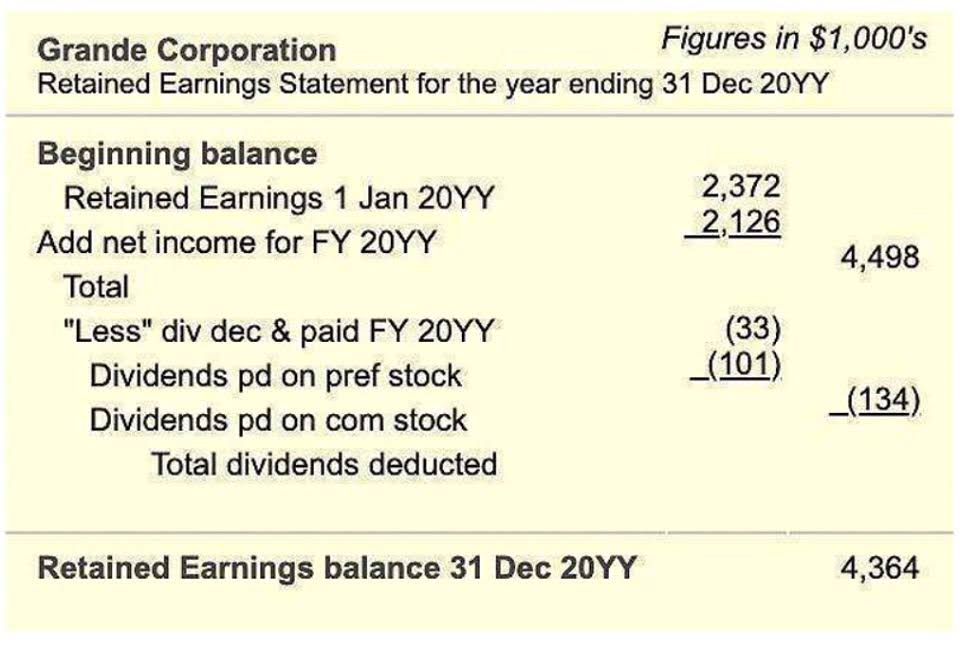
Rather than paying this income to shareholders, it remains with the company and is reinvested in the business. Over time, retained earnings can become a significant portion of equity, particularly if the firm is profitable and doesn’t pay high dividends. Retained earnings, as the name suggests, are the amount of net income that a company has kept (retained) over the years after paying off dividends. This component is quite indicative of the company’s financial health as it shows the extent to which it can finance its own operations and growth using the profits it has generated.

Mr. Trump slammed the decision by Apple shareholders to reject the proposal to end the company’s DEI initiatives. Apple shareholders on Tuesday rejected a proposal to end the iPhone maker’s diversity, equity and inclusion program. In addition to these metrics, it is important to analyze a company’s cost of goods sold (COGS). A high COGS could indicate that a company is not effectively managing its production costs, which could negatively impact profitability. Current assets (cash, accounts receivable, inventory) are assets that can be converted to cash within a year.

Issued Shares and Paid-in Capital

Lastly, if a company incurs a loss, it must be deducted from retained earnings. If the losses exceed the available retained earnings, it might eat into other areas of equity – this situation can lead to negative shareholders equity. The resulting figure ($155,000) represents the shareholders’ equity or the ownership interest of stockholders in the corporation.

Valuation is another important factor to consider when analyzing a company’s financial statements. Investors should look at the company’s price-to-earnings (P/E) ratio and compare it to the industry average. If the P/E ratio is higher than the industry average, it could indicate that the company is overvalued. On the other hand, if the P/E ratio is lower than the industry average, it could indicate that the company is undervalued.

The Statement Of Shareholder Equity reveals whether you are in good enough shape to borrow from a bank, whether there is value in selling the business, and whether it makes sense for investors to contribute. The value of Treasury Stock is the value of shares purchased/repurchased by the corporation. It is the gap between the number of shares issued and the number of shares outstanding. A dividend reduces the amount in Retained Earnings since it is the distribution of earnings. The corporation is taking money out of the business to give to owners (shareholders).


If the common stock has a par value, then whenever a share of stock is issued the par value is recorded in a separate stockholders’ equity account in the general ledger. Any proceeds that exceed the par value are credited to another stockholders’ equity account. This required accounting (discussed later) means that you can determine the number of issued shares by dividing the balance in the par value account by the par value per share. Common stock affects the balance sheet by increasing the equity section.

Understanding Common Stock

If you own common stock in a company, you have the right to vote on things like corporate policies and board of director decisions. The person who purchases the common stock of a corporation becomes an owner of the corporation and is known as common stockholder. Below liabilities on the balance sheet is equity, or the amount owed to the owners of the company. These are listed at the bottom of the balance sheet because the owners are paid back after all liabilities have been paid.

  1. Below are some of the most commonly found line items on balance sheets for publicly traded companies, with brief explanations of what each one means.
  2. If you were to take a clipboard and record everything you found in a company, you would end up with a list that looks remarkably like the left side of the balance sheet.
  3. However, they might still be less costly than the higher interest rates a company might have to pay to entice bond investors.
  4. From stockholders point of view, the negative aspect of this class of stock is that it does not possess the voting power.

Current assets

For example, if a company has one million outstanding shares and an investor holds 10,000 shares, they own 1% of the company’s common stock. Unlike preferred stock, which has specific privileges and may have a fixed dividend, common stock represents the residual ownership interest in a company. This means that common stockholders have the potential for higher returns on their investment but also bear greater risk compared to preferred shareholders. Additional paid-in capital is the amount of money that shareholders have paid for shares of common stock that is above the par value. It represents the amount of capital the company has received from investors in excess of the nominal value of the shares.

Everything You Need To Master Financial Modeling

The company now has 5,000 authorized shares, 2,000 issued, 500 in treasury stock, and 1,500 outstanding. The outstanding stock is equal to the issued stock minus the treasury stock. Helpful https://www.business-accounting.net/ Fool Company’s board has elected to issue just 2,000 shares at this time. Therefore, the company currently has authorized 5,000 shares and has 2,000 shares issued and outstanding.

Advantages and Disadvantages of Capital Stock

Before knowing how to calculate common stock on balance sheet; let us know its advantages. Calculating common stock on the balance sheet has several benefits for companies, investors, and other stakeholders. Broadly defined, common stock can be thought of as the bedrock of a company’s public offerings. Common shares are issued without promise of dividend to individuals who are interested in partial ownership of the company in question. In the event that the company issues stock at a premium, the following journal entry is recorded in the general ledger. As an illustration, XYZ Co. issues 10,000 shares at a $1 PAR value and a $0.5 premium.

How Do Stock Buybacks Impact Shareholders Equity?

For this reason, a balance alone may not paint the full picture of a company’s financial health. Many companies buy back shares as part of their capital allocation strategy. When a company buys back its own shares, that stock is accounted for as “treasury stock” on its balance sheet. Treasury stock is no longer outstanding — the company itself now owns it, not an investor or employee, but it has still been issued. The common stock outstanding of a company is simply all of the shares that investors and company insiders own.

Common Stock’s Contribution to Shareholders’ Ownership

A balance sheet provides a snapshot of a company’s financial performance at a given point in time. This financial statement is used both internally and externally to determine the so-called “book value” of the company, or its overall worth. A balance sheet is one of the primary statements used to determine the net worth of a company and get a quick overview of its financial health. The ability to read and understand a balance sheet is a crucial skill for anyone involved in business, but it’s one that many people lack. Shareholders’ equity tells you how much a company has left after covering its liabilities. If it wanted to, the company could then pay out all of that money to its shareholders.

This is also why all revenue and expense accounts are equity accounts, because they represent changes to the value of assets. Working with an adviser may come with potential downsides such as payment of fees (which will reduce returns). There are no guarantees that working with an adviser will yield positive returns. The existence of a fiduciary duty does not prevent the rise of potential conflicts of interest. Amortization is the process of taking an expense and expanding its cost over the life of the expense. If the company has lost money in the past, then retained earnings are replaced with a line item called “accumulated deficit,” which is a negative number.

In exchange for this degree of priority, however, preferred stock owners typically give up any voting rights they may have had. As mentioned previously, common stock is one of the most popular forms of equity purchased on the public markets today. For many investors, the appeal of common stockholders equity lies in its relative affordability and the ease by which it can be obtained.

This balance sheet also reports Apple’s liabilities and equity, each with its own section in the lower half of the report. The liabilities section is broken out similarly as the assets section, with current liabilities and non-current liabilities reporting balances by account. classified balance sheet financial accounting The total shareholder’s equity section reports common stock value, retained earnings, and accumulated other comprehensive income. Apple’s total liabilities increased, total equity decreased, and the combination of the two reconcile to the company’s total assets.

In addition, it is inexpensive for a company to issue new shares, which can be sold at a much higher price than the cost of issuing the securities. A bank statement is often used by parties outside of a company to gauge the company’s health. Balance sheets allow the user to get an at-a-glance view of the assets and liabilities of the company. Retained earnings are the net earnings a company either reinvests in the business or uses to pay off debt. The remaining amount is distributed to shareholders in the form of dividends.


The next shipment to sell would be the July lot under FIFO – since it is not the oldest once the June items are sold – leaving you with $2,000 profit. In summary, the First In, First Out method stands as a cornerstone in both inventory management and accounting. Its relevance spans across various industries, proving to be an essential strategy for businesses aiming for efficiency, accuracy, and financial clarity.

The Phillies are a machine, first in MLB to 30 wins and focused on the bigger picture

Companies must make an assumption about their flow of inventory goods to assign a cost to the inventory remaining at the end of the year. In certain situations, other inventory methods might be more appropriate. For example, in industries where item prices are subject to rapid fluctuations, such as electronics, the FIFO method might result in less accurate financial representation. Similarly, in businesses where the newest inventory is preferred for use or sale, like in fashion or technology, Last In, First Out (LIFO) or specific identification methods could be more suitable. The FIFO method is the first in, first out way of dealing with and assigning value to inventory. It is simple—the products or assets that were produced or acquired first are sold or used first.

Example with Data: How FIFO Can Improve Inventory Accuracy

If you’re ready to try out a dedicated inventory system, Zoho Inventory is free to start. If you’re a business that has a low volume of sales looking for the most amount of detail, specific inventory tracing has the insight you’ll need. But it requires tracking every cost that goes into each individual piece of inventory. The average cost method is the simplest as it assigns the same cost to each item. The average cost is found by dividing the total cost of inventory by the total count of inventory. Using specific inventory tracing, a business will note and record the value of every item in their inventory.

  1. In other words, under the first-in, first-out method, the earliest purchased or produced goods are sold/removed and expensed first.
  2. A migraine overcame their biggest star, Bryce Harper, 20 minutes before first pitch Tuesday.
  3. Logistically, that grocery store is more likely to try to sell slightly older bananas as opposed to the most recently delivered.
  4. FIFO, on the other hand, is the most common inventory valuation method in most countries, accepted by IFRS International Financial Reporting Standards Foundation (IRFS) regulations.

Implementation of the FIFO Method

She also regularly writes about business for various consumer publications. For more information, read our article on what COGS is and how to calculate it. FIFO is also the option you want to choose if you wish to avoid having your books placed under scrutiny by the IRS (tax authorities), or if you are running a business outside of the US. With over a decade of editorial experience, Rob Watts breaks down complex topics for small businesses that want to grow and succeed.

In addition to FIFO and LIFO, which are historically the two most standard inventory valuation methods because of their relative simplicity, there are other methods. The principle of LIFO is highly dependent on how the price of goods fluctuates based on the economy. If a company holds inventory for a long time, it https://www.bookkeeping-reviews.com/ may prove quite advantageous in hedging profits for taxes. LIFO allows for higher after-tax earnings due to the higher cost of goods. At the same time, these companies risk that the cost of goods will go down in the event of an economic downturn and cause the opposite effect for all previously purchased inventory.

Specialties include general financial planning, career development, lending, retirement, tax preparation, and credit. The example above shows how a perpetual inventory system works when applying the FIFO method. On 2 January, Bill launched his web store and sold 4 toasters on the very first day. The wholesaler provides a same-day delivery service and charges a flat delivery fee of $10 irrespective of the order size.

Note that the $42,000 cost of goods sold and $36,000 ending inventory equals the $78,000 combined total of beginning inventory and purchases during the month. Using the FIFO method, the cost of goods sold (COGS) of the oldest inventory is used to determine the value of ending inventory, despite any recent changes in costs. With what is the difference between a sales return and a sales allowance real-time, location-specific inventory visibility, intelligent cycle counts, and built-in checks and balances, your team can improve inventory accuracy without sacrificing operational efficiency. For example, say a rare antiques dealer purchases a mirror, a chair, a desk, and a vase for $50, $4,000, $375, and $800 respectively.

The sale of one snowmobile would result in the expense of $50,000 (FIFO method). Therefore, it results in poor matching on the income statement as the revenue generated from the sale is matched with an older, outdated cost. Let’s continue with our milk example and calculate the cost of the 80 gallons that were sold during the year. In this simple example, it’s pretty easy to see that all 80 gallons sold were in inventory at the beginning of the year with a cost of $2 each. If there were 120 snow globes left at the end of the year, 100 would be valued at the December purchase price and the other 20 would be valued at the November purchase price. It makes no difference when the items in the ending inventory were purchased.


inventory turnover calculator

On the Accounting side, we consider inventory as a current asset recorded on the balance sheet. It has a high degree of liquidity, meaning that we expect it to be converted into cash in a short period of time (less than one year). The Inventory Turnover Calculator can be employed to calculate the ratio of inventory turnover, which is a measure of a company’s success in converting inventory to sales. Initially, the days inventory outstanding (DIO) is calculated for the trailing periods to have historical data to reference. The weighted average cost method (WAC) is the third most widely used accounting method after LIFO and FIFO. In accounting, inventory describes a wide array of materials used in the production of goods and the finished goods waiting to be sold.

  • This is especially relevant for stores that have a small central warehouse or store inventory directly on the premises (e.g., convenience stores).
  • It provides insights into how effectively a business is utilizing its inventory to generate sales.
  • Economic Order Quantity (EOQ) is an essential concept that helps determine the optimal number of units to order, striking a balance between ordering costs and holding costs.
  • To regulate cooperation, you can use the LEAFIO Inventory Optimization solution, which allows you to transparently assess the reliability of each supplier.
  • Conversely, if a company needs fewer days to get rid of its inventory, it will be in a better financial position since the cash inflows will be more robust.
  • External factors like sudden demand shifts or supply chain disruptions can affect the accuracy of the inventory turnover calculations.

How does this inventory turnover ratio calculator work?

  • As per its definition, inventory is a term that refers to raw materials for production, products under the manufacturing process, and finished goods ready for selling.
  • Goods are transferred directly from inbound to outbound shipments, reducing warehousing expenses, carrying the cost of inventory, and the risk of inventory obsolescence.
  • Inventory turnover shows how many times the inventory, on an average basis, was sold and registered as such during the analyzed period.
  • Once you have everything you need, you can simply input the COGS figure, beginning inventory, and ending inventory.
  • This calculator enables businesses to make data-driven decisions regarding their inventory levels, allowing them to optimize their stocking strategies and improve financial performance.
  • This means that the inventory’s sell cash can cover the short-term debt that a company might have.
  • Obviously, an unstable supply chain is vulnerable to disruption, which can lead to increased inventory costs, lost sales, and damage to the brand’s reputation.

The carrying value of a company’s inventory is recorded on the current assets section of the balance sheet (or “statement of financial position). Imagine a supermarket chain relying on a single regional warehouse for fresh produce. When floods disrupt transportation routes, deliveries are delayed, leading to stockouts and increased spoilage. To compensate, the supermarket holds excess perishable inventory, raising waste and storage costs. External economic factors, such as inflation, interest rates, and market demand, cannot be ignored, as they all affect the value of inventory, especially in the long run.

The inventory involves all the non-monetary assets that can be recorded on the balance sheet, i.e., the company stores them with the intent to sell them and make profits. The calculator might not account for seasonal variations that can significantly impact inventory needs and turnover rates. Improve turnover by optimizing order quantities, implementing just-in-time inventory, forecasting demand accurately, and adjusting pricing strategies. For those investing existential questions, you better check the discounted cash flow calculator, which can help you find out what is precisely the proper (fair) value of a stock.

Inventory turnover calculator

This tool goes beyond mere calculations; it allows you to understand the efficiency of your inventory management and aids in making informed business decisions. It’s time to leverage the power of efficient inventory management with our Inventory Turnover Calculator. The Inventory Turnover Calculator is designed to be user-friendly and efficient. We understand that manually calculating inventory turnover can be time-consuming and prone to errors. Our calculator eliminates the need for complex spreadsheets or manual calculations, saving you valuable time and providing accurate results. By inputting the cost of goods sold, beginning inventory, and ending inventory, our tool instantly generates the inventory turnover figure you need.

Never forget that it is vital to compare companies in the same industry category. A company that sells cell phones obviously will not have an inventory turnover ratio that is meaningful compared to a company that sells airplanes. Once we sell the finished product, the company’s costs for producing the goods have to be recorded on the income statement under the name of cost of goods sold or COGS as it’s usually referred to. Note that depending on your accounting method, COGS could be higher or lower. Discover how ABC analysis can streamline inventory management, optimize stock levels, and boost efficiency. Below, we share effective methods and strategies to help your business reduce inventory costs.

Dead or SLOB (Slow Moving and Obsolete) inventory creates significant problems for retailers because it takes up space in the warehouse. It also can lead to significant losses, as such goods often have to be thrown away or sold at discounts in forced sales. To implement this strategy, you need a specialized software solution that can form a flexible supply chain, take into account demand forecasts, and ensure maximum availability for each SKU. Now, let’s assume that you have the opposite problem—your inventory ratio is too high. The best inventory ratio is the one that keeps your business as profitable as possible. This means you turn over your entire amount of inventory a little over 17 times each year.

inventory turnover calculator

With these numbers, your business will be selling and restocking your inventory roughly every one to two months. This inventory turnover calculator can help you determine whether you’re effectively managing your inventory turnover and maintaining a good inventory turnover ratio for your industry. Or you can use the more accurate option, which is dividing your COGS by your average inventory. DIO is calculated by dividing 365 (days in a year) by your inventory turnover ratio, showing how many days it takes to sell through inventory.

Related tools

Want to see how many times you sold your total average inventory over a period of time? Calculate your inventory turnover ratio to see how your business is performing. If your company’s cost of goods sold or inventory turnover ratio doesn’t align with the rest of the industry, then there’s potential room for improvement. Addressing your inventory turnover rate can help you take advantage of emerging market trends and identify new opportunities. A high inventory turnover ratio indicates that a business is efficiently selling its inventory and replacing it quickly, which can be a sign of effective inventory management.

Implement advanced demand planning and forecasting

This KPI helps companies understand how efficiently they manage inventory, affecting overall operational efficiency and profitability. For an investor, keeping an eye on inventory levels as a part of the current assets is important because it allows you to track overall company liquidity. This means that the inventory’s sell cash can cover the short-term debt that a company might have. If you are interested in learning more about liquidity, how to track it, and other financial ratios, check out our two tools current ratio calculator and quick ratio calculator. Retailers may enhance the storage and warehousing efficiency by relying on automated inventory management tools that optimize stock levels, reduce excess inventory, and improve space utilization.

The inventory turnover ratio calculator has a huge significance and influences your decision-making process. The inventory turnover ratio is an accounting metric that can help businesses analyze a variety of aspects and influence their decisions on purchasing, manufacturing, pricing, and more. If one of your products is in high demand, a supply chain system with faster and guaranteed delivery times may be a better option for your business. This will create fewer inventory issues down the line and help boost overall sales.

Advanced algorithms that automatically apply weekday-related coefficients enable the maintenance of optimal inventory levels by aligning stock with forecasted sales for specific days of the week. This approach helps prevent over-ordering during low-demand periods while ensuring adequate supply for higher-demand days. Furthermore, the Inventory Turnover Calculator saves you valuable time and resources. Manually calculating inventory turnover for multiple products or frequent analyses can be a tedious task. Our online tool automates the process, allowing you to generate accurate inventory turnover figures efficiently. This time-saving feature frees up your resources, enabling you to focus on other critical aspects of inventory management and strategic planning.

reasons a company may be improving its inventory turnover

This includes purchase requisition, purchase orders and invoicing, labor costs, and fees for transportation and processing. Any accurate calculation requires keeping track of all of these costs even if they look marginal at first. Observe that, and this is a point that often brings confusion, the formula uses the average inventory, and just the last inventory. It’s often smart inventory turnover calculator to run both of these formulas to get a clearer idea of how efficiently you’re running your business.


bookkeeping for real estate

FreshBooks integrates with 100+ apps, providing real Why Professional Real Estate Bookkeeping Is Essential for Your Businesses estate professionals control over their accounting and the ability to customize their FreshBooks workflows. Automatically add tracked time and expenses, calculate taxes, and customize your payment options. If you own property in California, every dollar missed in your books is a dollar you’re handing to the IRS or FTB. Book your customized real estate tax consultation and discover how KDA can optimize your deductions, minimize audit risk, and keep more profit from every door you own. Every dollar received (including reimbursed expenses from tenants) is reportable income.

bookkeeping for real estate

Key Differences in Accounting for Real Estate Business Across Property Types

  • Expenses are deductible when paid, not when an invoice is received.
  • The tips we’ll discuss in this guide will help agents and aspiring agents work through the challenges of bookkeeping in the real estate industry.
  • “Managing 20 rentals alone was overwhelming, but Landlord Studio became my one-stop shop. It simplified bookkeeping, rent, leases, and taxes — even my CPA loves it.”
  • If you’re a real estate agent, you know the importance of hiring a real estate assistant.
  • If you want to reduce your accounting and bookkeeping burden, CapActix will prove highly beneficial.
  • Baker Tilly’s real estate accounting services address the growing demands of industry clients’ evolving business and technology needs.

We align to your current tools during onboarding and build reminders, trackers, and export/report workflows around them. Add properties, entities, or reporting packs without rebuilding the process. AP/AR volume, property allocations, lease terms, and owner reporting require tighter process discipline. No more running around looking for receipts or wondering what a charge was.

Step 4: Reconcile accounts regularly

bookkeeping for real estate

Accounting for real estate business varies depending on the type of property and how it is used. Each property category has its own income patterns, expenses, and reporting needs. In group investments, real estate fund accounting ensures investor contributions, distributions, and profits are tracked and reported clearly, building trust and transparency.

Senior Accounting Manager

bookkeeping for real estate

Tailor your accounts by property or business model so reporting remains organized and meaningful. QuickBooks Online allows you to customize, add, or edit accounts easily. Security deposits should be recorded in property management accounting. All tenants’ security deposits should have a ledger account for balance, transactions, and dates. Security deposits must be reported per trust fund rules and held in a separate account from your operating account. Check your bank statements and security deposit ledger regularly and report discrepancies.

  • Financial reporting gives you a clear picture of where your money is going, what’s working, and where to improve.
  • By acknowledging these distinctions, property managers and investors can better navigate the complexities of their financial landscape.
  • It is the process of recording, managing, and reporting financial transactions related to property ownership and investment.
  • As a real estate agent, you have a lot to juggle between clients, listings, networking, and bookkeeping.
  • Not tracking the incoming and outgoing transactions can cause problems, including the inability to pay bills and manage day-to-day operations.
  • In the real estate industry, success is often measured by closed deals and commission earned.

It helps manage complex investments and provides clear financial visibility to everyone involved. Property fund accounting focuses on tracking capital contributions, distributions, profits, and investor ownership percentages. It also records management fees, preferred returns, and carried interest where applicable. This helps the fund manager keep every financial transaction clear and correctly allocated. Real estate fund accounting is used when funds are pooled from multiple investors to invest in properties.

  • Or if your commission income drops by more than 10% compared to your usual average, that could signal pipeline issues, delayed closings, or a drop in conversion rates.
  • Seamlessly run payroll, track expenses, and calculate taxes without juggling separate tools.
  • Knowing how to itemize your financial accounts properly can save you time and effort at tax time and alleviate stress.
  • Many agents look at their average DOM and compare it to market averages to get a feel for how well their sales strategies are working, as well as the general temperature of the local market.
  • When you use bookkeeping strategies to track expenses, you will have complete visibility over the financial condition.

budget for nonprofit organization example

Our online business banking and money management platform allows nonprofits to open 20 individual checking accounts for program budgets, operating expenses, and beyond. America’s 1.5 million nonprofit organizations are at the heart of our communities, from supporting arts and culture to providing essential services for people in need. ❤️ To successfully deliver these programs—without running out of resources—effective nonprofit budgeting is key. They also simplify monitoring financial progress and adjusting strategies as needed, proving indispensable for both new and established organizations.

Printable Nonprofit Budget Example

In our collection, you can find perfectly designed non-profit budgeting form templates that help you track your income and expenses efficiently. For a non-profit organization, donations and grants are may the only way to meet the expenses that they face in helping others. You can find a tremendous collection of donation receipt templates that you can use to let the donor know that the donation he/she has made has been received successfully. However, this doesn’t mean that your nonprofit’s overhead spending can go unchecked or should be prioritized over program expenditures.

Get our checklist of the best free nonprofit tools of 2024 sent directly to your inbox

  • Sometimes you’ll need the support of experts to help you run your nonprofit efficiently and smoothly.
  • Running a nonprofit is a lot like learning to juggle—exciting as the skill is, it’s harder than it looks!
  • In our collection, you can find perfectly designed non-profit budgeting form templates that help you track your income and expenses efficiently.
  • A budget combined with a fundraising plan can help you make sure there’s always money to pay for the things you need to operate your programs.
  • If you’re managing a multiple six- or seven-figure budget, asking a financial expert for help is always a good idea.
  • It’s time to ask yourself some questions about the programs and services your new nonprofit will provide this year.
  • To ensure that your nonprofit is adequately funded, be sure to set a separate budget for each department within your overall financial plan.

Here’s a very basic example—but remember that your organization’s budget might be more complicated than this (or maybe even simpler!). Full Suite of Accounting, Payroll and Fund Raising and Fund Accounting applications for nonprofit organizations. Software designed for nonprofits and churches with fund accounting, accounting services for nonprofit organizations donor management, giving tracking, reporting, and more. When it comes to planning an event, executing it successfully depends on how prepared you are! Put simply, revenue is the money you bring in from normal business operations. Because nonprofit funding is often very flexible, it’s absolutely necessary to have many diverse revenue streams.

Step 5: Generate financial reports for transparency

  • Program expenses include any costs incurred in service of your mission.
  • These templates are in high resolution to assure you of clear and legible prints and are fully editable to allow you to make all the necessary changes, hassle free.
  • The work you do is amazing, but to make an impact you need people to hear about it.
  • The responsibility of creating your operating budget typically falls to your chief financial officer (CFO) or nonprofit controller.
  • Ideally, salary allocations will be based on regular, reliable tracking of time.
  • Contact us if you have any questions about our non-profit templates free resources or NGO templates free downloads and budget for nonprofit template outlined in the sections below.
  • These numbers will often be estimates based on your goals or what you earned and spent last year.

Running a nonprofit is a lot like learning to juggle—exciting as the skill is, it’s harder than it looks! If you’re looking for a way to keep all those balls in the air, nothing is more valuable than a foolproof nonprofit budget. If you have a special project in mind, create a separate budget for it.

  • In communicating with your board members, nonprofit leaders, and supporters about how donations are being used, transparency is key.
  • To make sure you get to the job done effortlessly, download the above nonprofit budget basic template, as it will prove to be of great help for you and your organization while creating the budget.
  • As explained above, indirect expenses are generally all of our administrative expenses – those expenses that support the overall management of the organization.
  • This guide is designed to help nonprofits of all sizes master the art of budgeting.
  • If your organization plans to hold a concert for a cause, you have to consider the costs for the venue, organizing committee, marshalls, equipment, printable ticket production, and many more.
  • Investing in cash management software is also a great way to gain better visibility and ensure financial stability.

This sample budget outlines various categories for both income and expenses, providing a clear framework for organizations to project their yearly financial operations. Calculating and analyzing the true cost of programs and activities can be completed as a one-time project or implemented as an ongoing management practice, as we recommend. If that is the goal, it’s worthwhile to make sure that the program and cost definitions match the setup of your accounting system. Any accounting software can be used to maintain program-based financials, but they each have their own structure and terminology.

Becomes Useful if You’re Looking for Grant Funding

Instead, treat this as a guideline to reduce overhead spending (within reason) before taking funding away from your programs if you need to cut costs. For the purposes of this article, we’ll focus primarily on operating budgets because of their central role in nonprofit finance. However, you can adapt some of our tips to create other types of budgets. Additionally, remember that any budget that covers a specific aspect of your nonprofit’s spending and fundraising should align with your operating budget. If you’ve created a budget for your household before, you probably averaged your expenses, calculated your income, and determined how much you could save for the future. Nonprofit budgeting follows a similar process, except you’re projecting revenue and expenses for your entire organization.

budget for nonprofit organization example

What Should Be Included In a Nonprofit Budget

budget for nonprofit organization example

The idea behind the Nonprofit Grant Proposal Budget Template is to solidify your nonprofit’s standing regarding its eligibility for funding. The Nonprofit Project Budget Template by Go Skills is a spreadsheet designed specifically for project tracking. It is, therefore, ideal to use if you have multiple projects on the go with varying levels of importance and you want to keep an eye on how each project is performing individually. Additionally, this spreadsheet not only allows you to report on your nonprofit’s progress either on an annual or quarterly basis. The summary table at the very bottom will help you see how you’re tracking as far as year-to-date, and year-to-date budget totals go. Ready to see how Givebutter https://nerdbot.com/2025/06/10/the-key-benefits-of-accounting-services-for-nonprofit-organizations/ can help you stick to your budget and accomplish your mission?

budget for nonprofit organization example

Now that you know what should be included in your nonprofit budget, it’s time to start creating one. The process of creating a nonprofit budget is similar to the process of creating a budget for any other type of business. Next is for you to see if whether or not the amount of income your nonprofit organization acquires is greater than its expenses. Be sure to come up with accurate figures when calculating the total of both as the information will help lead you into making important financial decisions.

Nonprofit Project Budget Template

Use this template to step into the financial stability and strategic planning that will enable your organization to make a lasting impact on the communities you partner with. Moreover, you can easily edit this budget template according to your preferences and convenience. For a more convenient integration of your changes, it is best to use Google Sheets. You can add or remove categories, adjust budget amounts, and update actual expenses as you receive financial statements or make payments. Well-developed budgets help your nonprofit be financially transparent with its team, board, supporters, and community at large.


external audits are performed by

Depending on the https://www.bookstime.com/ type of compliance audit, an organization might receive an audit opinion, as with SOX and SOC audits. Audit opinions are issued over the efficacy of an organization’s internal controls as they relate to specific criteria. Not all compliance audits are pass or fail; regardless, noncompliance can have less than ideal consequences. Learn which audit type suits your organization’s needs best, from reporting lines and objectives to regulatory requirements. Internal audits are used to improve decision-making within a company by providing managers with actionable items to improve internal controls.

external audits are performed by

Reporting

The US government mandates audits for several regulatory areas across finances, transactions, health information, and information security. Publicly traded companies have their financial statements audited on an annual basis, incorporating the stipulations of the Sarbanes-Oxley Act (SOX). For a summary of compliance audit types and their purposes, refer to the table in the following section. An external audit provides management, investors, and lenders confidence that financial reporting presents an accurate view of the company’s financial performance. Completion stage is the final stage of the external audit process where auditors make their conclusion on the client’s financial statements whether they present fairly, in all material respects.

How to Prepare An Internal Audit Program? Tips and Guidance

external audits are performed by

In some cases, the external audit may rely upon the work of internal auditors rather than performing all of the work themselves. In so doing, the external auditors perform steps to determine the independence and quality of work performed by the internal audit function to substantiate their reliance upon the work performed. While the difference between internal audit and external audit lies in their focus, both processes can complement each other.

external audits are performed by

The three ways audits can be conducted are:

  • Throughout the fiscal year, records should be kept up to date, which can reduce the pressure near the time of the audit.
  • The internal auditor reviews financial reports and records, operational processes, and risk management practices to find potential weaknesses and areas for improvement.
  • By automating and integrating, businesses reduce the risk that compliance activities won’t be documented, or won’t be executed properly.
  • The opinion given is either an unqualified opinion, meaning there were no material exceptions, or a qualified opinion, meaning that a material exception was noted.
  • Digitized records and automated accounting software can help your company streamline the process, automatically find inconsistencies, and visualize data to inform executive decisions.
  • Internal audits focus on improving processes and aligning them with strategic objectives, while external audits provide independent verification of financial accuracy and regulatory compliance.
  • XYZ ltd manufactures garments and is listed as a publicly-traded company, i.e., sell their shares to the public.

In this article, we will explain the main 14 types of audits internal vs external audit being performed in the current audit industry or practices. The audit is classified into many different types and levels of assurance according to the objectives, scopes, purposes, and procedures of auditing. Audit reports sometimes submit to other stakeholders like the government, banks, creditors, or the public. Within the U.S., the Internal Revenue Services (IRS) performs audits that verify the accuracy of a taxpayer’s tax returns and transactions.

These records need to be independently audited to ensure they provide a full and accurate picture of a company’s financials. Internal audits should be conducted regularly based on your organization’s risk profile and operational needs. They’re often scheduled quarterly or annually, with additional audits triggered by significant changes, such as system upgrades or new regulations. External audits, on the other hand, are typically mandated annually for financial reporting or compliance purposes, especially for publicly traded or regulated companies. Typically, either in-house professionals or third-party auditing services conduct internal audits.

How an Internal Audit Works

external audits are performed by

Yes, the terms “independent auditor” and “external auditor” are often used interchangeably. External auditors are mainly responsible for providing an opinion on the accuracy of the financial statements. In an era where businesses often operate across borders and cultures, language audits have gained significance. Language audits help online bookkeeping organizations maintain consistency in their multilingual communications, enhance their brand image in diverse markets, and ensure compliance with language-related regulations.


double declining balance method

Download the free Excel double declining balance template to play with the numbers and calculate double declining balance depreciation expense on your own! The best way to understand how it works is to use your own numbers and try building the schedule yourself. An exception to this rule is when an asset is disposed before its final year of its useful life, i.e. in one of its middle years. In that case, we will charge depreciation only for the time the asset was still in use (partial year). Like in the first year calculation, we will use a time factor for the number of months the asset was in use but multiply it by its carrying value at the start of the period instead of its cost. We can incorporate this adjustment using the time factor, which is the number of months the asset is available in an accounting period divided by 12.

Cons of the Double Declining Balance Method

double declining balance method

There are various alternative methods that can be used for calculating a company’s annual depreciation expense. Using the steps outlined above, let’s walk through an example of how to build a table that calculates the full depreciation schedule over the life of the asset. In this comprehensive guide, we will explore the Double Declining Balance Method, its formula, examples, applications, and its comparison with other depreciation methods. Sara wants to know the amounts of depreciation expense and asset value she needs to show in her financial statements prepared on 31 December each year if the double-declining method is used. For example, if an asset has a salvage value of $8000 and is valued in the books at $10,000 at the start of its last accounting year. In the final year, the asset will be further depreciated by $2000, ignoring the rate of depreciation.

double declining balance method

Double Declining Balance Method for Depreciation (With Examples)

If you want to learn more about fixed asset accounting as a whole, then head to our guide on what fixed asset accounting is, where we discuss the four important things you need to know. Also, if you want to know the other essential bookkeeping tasks aside from fixed asset accounting, you can read our piece on what bookkeeping is and what a bookkeeper does. By dividing the $4 million depreciation expense by the purchase cost, the implied depreciation rate is 18.0% per year. As a hypothetical example, suppose a business purchased a $30,000 delivery truck, which was expected to last for 10 years. Under the straight-line depreciation method, the company would deduct $2,700 per year for 10 years–that is, $30,000 minus $3,000, divided by 10. The underlying idea is that assets tend to lose their value more rapidly during their initial years of use, making it necessary to account for this reality in financial statements.

  • The double declining balance method accelerates depreciation charges instead of allocating it evenly throughout the asset’s useful life.
  • However, depreciation expense in the succeeding years declines because we multiply the DDB rate by the undepreciated basis, or book value, of the asset.
  • At the beginning of the first year, the fixture’s book value is $100,000 since the fixtures have not yet had any depreciation.
  • The final step before our depreciation schedule under the double declining balance method is complete is to subtract our ending balance from the beginning balance to determine the final period depreciation expense.
  • Adam Hayes, Ph.D., CFA, is a financial writer with 15+ years Wall Street experience as a derivatives trader.

Want better bookkeeping?

Besides his extensive derivative trading expertise, Adam is an expert in economics and behavioral finance. Adam received his master’s in economics from The New School for Social Research and his Ph.D. from the University of Wisconsin-Madison in sociology. He is a CFA charterholder as well as holding FINRA Series 7, 55 & 63 licenses.

double declining balance method

FitBuilders estimates that the residual or salvage value at the end of the fixed asset’s life is $1,250. Since we already have an ending book value, let’s squeeze Interior Design Bookkeeping in the 2026 depreciation expense by deducting $1,250 from $1,620. Hence, our calculation of the depreciation expense in Year 5 – the final year of our fixed asset’s useful life – differs from the prior periods. Even if the double declining method could be more appropriate for a company, i.e. its fixed assets drop off in value drastically over time, the straight-line depreciation method is far more prevalent in practice.

  • It is advisable to consult with a professional accountant to ensure that depreciation is accurately recorded in compliance with accounting standards and regulations.
  • Accelerated depreciation is any method of depreciation used for accounting or income tax purposes that allows greater depreciation expenses in the early years of the life of an asset.
  • The total expense over the life of the asset will be the same under both approaches.
  • In addition, capital expenditures (Capex) consist of not only the new purchase of equipment but also the maintenance of the equipment.
  • While it may not reflect an asset’s actual condition as precisely, it is widely used for its simplicity and consistency.

The double declining balance method of depreciation, also known as the 200% declining balance method of depreciation, is a form of accelerated depreciation. This means that compared to the straight-line double declining balance method method, the depreciation expense will be faster in the early years of the asset’s life but slower in the later years. However, the total amount of depreciation expense during the life of the assets will be the same. The double declining balance method accelerates depreciation charges instead of allocating it evenly throughout the asset’s useful life.

Proponents of this method argue that fixed assets have optimum functionality when they are brand new and a higher depreciation charge makes sense to match the fixed assets’ efficiency. The double declining balance method (DDB) describes an approach to accounting for the depreciation of fixed assets where the depreciation expense is greater in the initial years of the asset’s assumed useful life. The Double Declining Balance Method (DDB) is a form of accelerated depreciation in which the annual depreciation expense is greater during the earlier stages of the fixed asset’s useful life.

Fixed Asset Assumptions

In summary, the choice of depreciation method depends on the nature of the asset and the company’s accounting and financial objectives. The amount of final year depreciation will equal the difference between the book value of the laptop at the start of the accounting period ($218.75) and the asset’s salvage value ($200). After the final year of an asset’s life, no depreciation is charged even if the asset remains unsold unless the estimated useful life is revised. After the first year, we apply the depreciation rate to the carrying value (cost minus accumulated depreciation) of the asset at the What is bookkeeping start of the period. This is because, unlike the straight-line method, the depreciation expense under the double-declining method is not charged evenly over the asset’s useful life.


accountant qbo

You don’t need anything saved on your computer, and there are no disks to load. Simply log in on a web browser and jump right into your QuickBooks online account. Your personal data and settings are right there, stored safely in ‘the cloud’. Discount and list price subject to change at any time at Intuit’s sole discretion.

QuickBooks Online Accountant Review (

  • With five plans, each at different price points, users can choose the plan that best meets their business needs without paying for additional features that they don’t want.
  • Large businesses that need access for up to 25 users will probably want to go with QuickBooks Advanced.
  • Our Terms of Service apply to all QuickBooks Online subscriptions.
  • You can save modified reports and export them as CSV, PDF, and Excel.
  • FreshBooks is great for self-employed individuals, sole proprietors and independent contractors.

Sign up to use QuickBooks Online Accountant for your accounting firm for free. We offer different plans and features designed for businesses of all sizes and industries. We also integrate seamlessly with a wide range of third-party apps and services to help you improve your workflow enabling you to customise our platform to suit your business needs. Such notice is not intended nor will it have the effect of relieving the Participant of any liability under this Agreement or applicable law. Service records are slightly less detailed than product-based ones, but they’re still thorough enough. You can enter sales and cost prices and other descriptive information.

Do more with QuickBooks Online

accountant qbo

Access a variety of self-paced and live training options to become a more trusted advisor. Hone your craft, prep for QuickBooks https://www.bookstime.com/ Certification, and earn CPE credits. Manage your firm’s books with the powerful features of QuickBooks Online Advanced.

No one holds themselves accountable like accountants.

  • Just enter your name, email address and choose a password and you’re good to go – we don’t ask for your payment details for trial and you can cancel anytime.
  • When you become certified, you can be listed in our Find-a-ProAdvisor directory where over a million small businesses each year are looking to hire an accounting professional like you.
  • The materials feature will help your clients to track the costs of parts, tools and other physical materials.
  • We have been an industry leader for 40 year and are trusted by over 7 million customers globally.
  • This is where consumers go to find well-qualified QuickBooks accountants, giving you the ability to expand your business.

We have been an industry leader for 40 year and are trusted by over 7 million customers globally. Online accounting software is sometimes called ‘cloud-based software’. It allows users to create, store and send invoices from any device.

accountant qbo

Each account keeps track of your transactions and shows your balances. This helps you categorize transactions and set up the chart of accounts correctly to make sure your books are accurate. The Android and iOS apps for QuickBooks Online are outstanding—by far the best of any small business accounting software I’ve reviewed.

Because there is an unlimited number of users that can use the program, you can maximize its use if you have a team of professionals who need access to your accounting software. For Xero’s Early plan ($13), the number of invoices that users can send each month is capped at 20, but for all other Xero plans, users can send unlimited invoices. QuickBooks Online Accountant is a way for accounting firms to grow their business with a reputable and reliable software partner. Read our in-depth QuickBooks Online Accountant review to find out if this cloud-based solution is right for you, based on features, pricing and more. Charts and lists keep you updated quickly on your financial status.

  • Choosing an accounting software to use with your clients is a big decision.
  • You can start a chat with us in the chat box on the right, if you want us to help you decide what is the best plan for you.
  • If you add or remove services, your subscription fees will be adjusted accordingly.
  • QuickBooks Online is one of the preeminent cloud-based accounting software platforms on the market.
  • Click Your Books in the navigation bar on the left side of the screen to manage your own firm’s books and payroll.

accountant qbo

There are self-paced guides to walk you through functions, video recordings to hone your skills and webinars to stay abreast of current changes in the field. Leverage the QuickBooks optional third party accountant qbo apps to add powerful functionality to your practise or client’s accounting processes. The materials feature will help your clients to track the costs of parts, tools and other physical materials.

Next steps: Get started with QuickBooks Online Accountant

See what QuickBooks can do for your business.


basic accounting principles and tools

The auditor conducts the audit under a set of standards known as Generally Accepted Auditing Standards. The accounting department of a company and its auditors are employees of two different companies. The auditors of a company are required to be employed by a different company so that there is independence. The long-term value of implementing sound accounting practices in your business cannot be overstated. Accurate and timely financial records are essential for assessing overall business performance and steering your business towards growth and stability. Adherence to accounting principles and the use of efficient accounting systems form the bedrock of trustworthy financial reporting.

#1 – Accrual principle:

Whether it’s getting a degree, taking courses, or attending workshops, formal education helps you gain important knowledge and opens doors to various career paths. Advanced degrees like Master’s in Finance, Accounting, or MBA provide deep insights into financial theory, risk management, reporting, and decision-making. These programmes offer real-world exposure, industry trends, and networking. Leaders must analyse market trends, competitive forces, and internal capabilities to set the direction for the company. These decisions often shape the company’s growth, market positioning, and long-term goals.

Bookkeeping 101: The basics

Online bookkeeping software and tools provide a reliable and cost-effective solution to help a business save time and reduce errors. In addition, these tools are efficient in streamlining tedious processes and providing valuable insights into the company’s financial health. Collectively, these reports provide an all-encompassing view of a company’s financial performance. These reports help stakeholders make informed decisions and identify potential areas of improvement.

Basic Accounting and Bookkeeping Principles

  • Besides, different regulatory bodies, like SEBI, also make it compulsory for companies to completely disclose the true and fair picture of their state of affairs and profitability.
  • Typical liabilities include accounts payable, notes or loans payable, wages payable, interest payable, taxes payable, customer deposits, deferred revenue, and more.
  • The profit and loss statement and statement of cash flows cover a particular time period, such as a quarter or a calendar year.
  • If your business is an LLC, Partnership, or Corporation, you are required to have a separate business bank account.
  • Each transaction should be recorded under the correct part of the business it belongs to, such as a specific government agency or corporation.
  • Students sometimes enter accounting programs with little technical knowledge.

Many business expenses are tax deductions — expenses that deduct from what you owe in taxes. For example, if I spent $500 to fly to https://encephalitis.ru/index.php?newsid=3155 and attend a marketing conference, that’s $500 less I owe in taxes for that year. Whether you’ve just launched your business or are a startup veteran, the following section is important.

basic accounting principles and tools

Principle of Materiality in Tax Accounting

  • All financial information, both negative and positive, is disclosed accurately.
  • In tandem with the disclosure principle, the materiality concept notes that all significant transactions and notes that hold decision-making value should be part of financial statements.
  • To calculate burn rate, I simply pick a time period (such as a quarter or a year).
  • For example, if a company sells 5,000 units of Product X, it should report the cost of the 5,000 units on the same income statement as the sales revenues.
  • Understanding accounting principles is a must, but it doesn’t guarantee that your accounting will go smoothly.
  • This principle states that transactions should be recorded when they occur, not when cash is exchanged.

By this convention, profits are not recorded for an overestimated amount, and losses or expenses are provided as provisions in the books. https://encephalitis.ru/index.php?newsid=4198 For better understanding, we have also discussed the conventions of accounting. Basic knowledge of taxation is essential, whether for personal finance or business operations. Taxes are compulsory contributions individuals and businesses make, and understanding taxation is essential for both personal financial management and business operations.

These transactions are chronicled over a specific accounting period – be it monthly, quarterly, or annually – and form the basis for financial statements. The precision and standardization of this process are vital, ensuring consistency and clarity in financial reporting, which is the cornerstone of financial accounting. Many small businesses start out with cash basis accounting, but accrual basis financial statements give you a much better understanding of your business’s financial position.

basic accounting principles and tools

Even if you are a novice accountant, make sure to have clear ideas of the types and characteristics of accounting principles to avoid errors in financial recordings and produce accurate results. Accounting principles are the common guidelines and rules related to accounting transactions that are followed to prepare financial statements successfully. These principles are the founding guidelines for preparing and recording financials for proper analysis.

  • A few financial governing bodies ensure accounting standards are upheld as they should be.
  • You debit your expense account and credit your bank or other cash account.
  • Whether conducted in-house or through different accounting services, mastering the basics of bookkeeping is crucial in running a successful business.
  • Collectively, these reports provide an all-encompassing view of a company’s financial performance.

The company will realise the same as soon as the goods have been shipped even though it will receive the amount in the future. The cost concept of accounting states that an organization should record all of its assets at their purchase price in the books of accounts. This amount also includes any transportation cost, acquisition cost, installation cost, and any other cost spent by the firm for making the asset ready to use. It has also spent a sum of ₹10,000 on transportation, ₹20,000 on its installation, and ₹15,000 on making it ready to use. The total amount at which the organization will record the value of machinery in the books of account would be ₹60,45,000.

This principle binds the essential amount of research and time https://taurion.ru/access/12/12 to record or account for the financial information if the cost crosses over the benefit. Therefore, if recording an insignificant event costs the company a substantial amount of money, it should not be recorded in the books. For businesses, efficient financial management is a critical component of success. It involves creating and adhering to budgets, monitoring cash flow, and optimizing resource allocation. Techniques like Activity-Based Costing help businesses identify cost-saving opportunities and make informed decisions based on financial data. In this blog on Basic Accounting Skills, discover the fundamental principles of Basic Accounting Skills.